
What they Didn’t tell you about Pitcoin
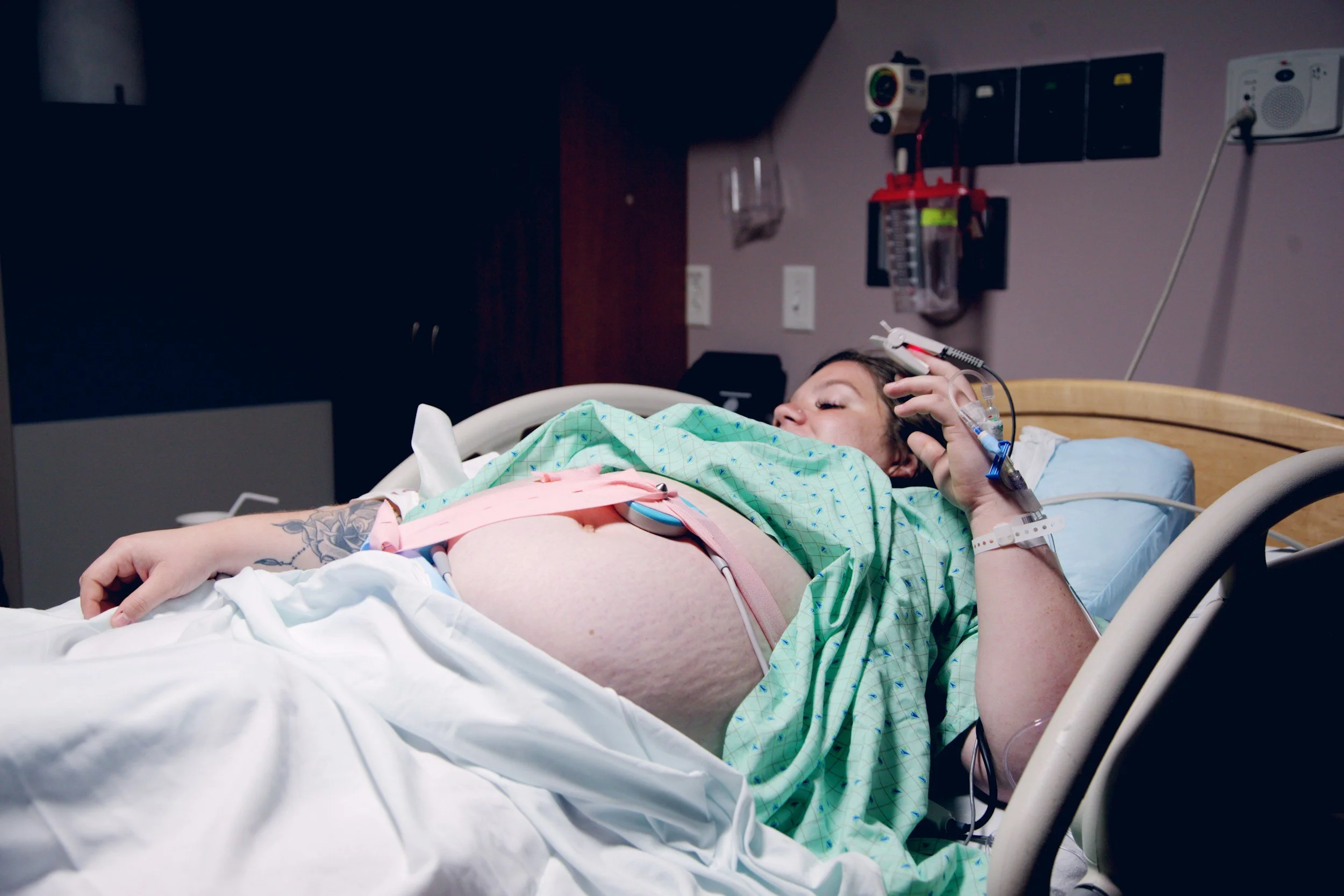
The drug used in nearly one in four births — and what informed consent actually requires
I believed Pitocin was just like oxytocin.
I was a NICU nurse. I thought I understood birth. I thought I knew what I was agreeing to.
I didn't.
I only knew managed birth. And I didn't know the difference until I experienced myself what that drip actually does — and until years later, when I finally understood that everything that followed was connected.
The stretch and sweep came first. "Just pressure," they said. Tears streamed down my face. I tried to be brave as I braced against the pain.
Later on my waters broke. The cascade began. Fetal monitor. IV antibiotics — I was GBS positive. Things weren't progressing fast enough. Pitocin was the answer. Induction.
Can't eat. Can't bear the contractions. Epidural — numb on one side. Can't move. Told when to push. How to push.
Then baby placed on my chest. Oh you’re here!
Postpartum was terrible. Breastfeeding was horrendous. No bond. No connection.
I thought something was wrong with me.
But nothing was wrong with me.
Nobody had told me it was all connected.
The comments
When I posted about Pitocin recently, the comments and stories poured in.
Women that experienced the same, that finally understood what happened, women finally being heard.
"I arrived 2cm dilated. They started Pitocin immediately. Contractions overwhelming. Epidural that didn't work. Stuck to the bed. 17 hours. Emergency c-section. The hospital created the problem they had to save me and my baby from."
"After seventeen years — I just realized what happened to me in my labour."
"I always just thought he was a hard child."
"I wish I knew."
Over and over. Women who carried something they couldn't name — for years, sometimes decades — and finally had language for it.
They weren't told the truth. And this is what that costs.
What Pitocin actually is
Your body makes oxytocin during labour. It is sometimes called the love hormone, the bonding hormone. During physiological labour it releases in natural pulses — working with your body's own rhythm, ebbing and flowing as labour progresses.
Crucially, your body's oxytocin crosses the blood-brain barrier. It activates the brain's pleasure and reward centres. It modulates pain. It prepares both you and your baby for the moment of meeting. Bonding, connection, breastfeeding and healing.
Pitocin is synthetic oxytocin. First synthesised in 1953 by Vincent du Vigneaud, who won the Nobel Prize in Chemistry for the work. Chemically almost identical to your body's hormone — but administered as a constant IV drip, at levels more than double what your body produces in natural labour.
Synthetic oxytocin does not cross the blood-brain barrier.
You get the contractions. Without the bonding chemistry. Without the pain modulation. Without the love surge. Without the safety mechanisms, physiology puts in place.
The uterus contracts harder and faster than it was designed to. Mechanically. Relentlessly. The muscle depletes oxygen. Lactic acid builds. The stress response activates — even through an epidural. This is why Pitocin contractions feel unbearable to so many women. Not because they are weak. Because the uterus is being pushed beyond its natural design.
Pitocin is classified as a high-alert medication by the Institute for Safe Medication Practices — meaning it requires special safeguards due to the risk of significant patient harm. It is associated with uterine hyperstimulation, uterine rupture, fetal distress, increased cesarean rates, increase risk of postpartum hemorrhage, breastfeeding difficulties, and disruption of the postpartum bonding process.
It also suppresses your body's own oxytocin production. The biggest oxytocin release of your entire life — the surge designed to flood both you and your baby at birth, to seal the bond, to activate the cascade of love — can be diminished when synthetic oxytocin has been running through your system.
The cascade
The sequence that follows Pitocin is not a theory. It is a clinical pattern that women describe in their own words and that research documents.
Pitocin administered — often without genuine clinical indication. Contractions become mechanically overwhelming. Epidural requested. Woman can no longer feel to push effectively. Directed, coached pushing replaces the body's own instinct. Labour stalls. Exhaustion sets in. Pitocin is turned up. Uterine hyperstimulation, frequent, excessive contractions. Blood flow through the placenta is reduced. Fetal heart rate decelerations appear on the monitor. "Fetal distress" is declared. Emergency csection.
A 2024 systematic review and meta-analysis found that turning Pitocin off in active labour was associated with a 20% lower cesarean rate, a 55% reduction in uterine tachysystole, and lower rates of fetal distress — adding only 30 minutes to active labour.
Turning it off reduces the emergency that it caused.
That is what the research shows.
The misused indications
Like all medical intervention, pitocin can have genuine clinical roles.
What the published evidence does not support — and what women are routinely not told — is that several of the most common reasons Pitocin is offered are not genuine medical emergencies, or indications of necessary induction.
Big baby. Ultrasound weight estimates at term carry a margin of error of up to 20%. A baby estimated at 4kg could weigh anywhere from 3.2 to 4.8kg. A published evidence review found insufficient evidence to support routine induction for fetal macrosomia. Fear of a big baby leads to induction. Induction leads to the cascade.
Post dates before 42 weeks. Due dates are calculated using Naegele's rule — developed in 1812, based on a small sample of European women, assuming a 28-day cycle and ovulation on day 14. It is a statistical average applied to every individual pregnancy as if it were clinical fact. It is not. Your baby sends a hormonal signal that initiates labour when the lungs are ready to breathe. The baby decides. Not the calendar.
GBS colonisation. Group B Strep colonisation is not an infection. It is colonisation — transient, with significant false positive and false negative rates. The actual risk of transmission causing severe illness in baby is approximately 1 in 2,000 in colonised women. The routine IV antibiotic protocol disrupts the infant's microbiome from the first moments of life. Emerging research links early microbiome disruption to allergy, eczema, immune dysfunction, and gut issues. GBS colonisation is not a reason to induce labour. It is routinely used as one.
Gestational diabetes. A review of 49 clinical guidelines found no consensus on whether gestational diabetes warrants routine induction. The evidence does not clearly support it.
The World Health Organisation states that induction should only be performed when expected benefits outweigh potential harms. That standard is not consistently being applied.
What informed consent actually requires
Before agreeing to Pitocin — or any induction — you deserve to know:
What the drug does to your contractions compared to natural labour. That it does not cross the blood-brain barrier. What it does to your body's own oxytocin production. What it may set in motion. That your due date is a statistical estimate. That GBS colonisation is not an infection. That ultrasound weight estimates have significant error margins. What the genuine alternatives are. That you have the right to decline, to wait, to ask more questions.
Most women were not given this information. They said yes without the full picture.
That is not informed consent.
That is coercion dressed as care.
This is why we gather
Not out of fear. Not to be against medicine.
To be for women having the information they deserve before they walk into that room.
To close the gap between what women are told and what women deserve to know.
So no woman reads something like this years after her birth and says — oh. That is what happened to me.
So no one has to say: I wish I knew.
Reclaiming Birth Gathering — September 10–12, 2026 · Caledon, Ontario.
For every woman who deserves the truth.
[reclaimingbirthconference.com/tickets]
About Kristen Nagle Former NICU nurse, holistic nutritionist, homeschooling mother of three, and founder of Reclaiming Birth Gathering — an annual family gathering in Ontario dedicated to restoring trust in physiological birth and the families it transforms.
@kristen_nagle · @reclaimingbirthgathering · kristennagle.ca
Tags: Pitocin, synthetic oxytocin, cascade of interventions, informed consent, physiological birth, undisturbed birth, oxytocin blood brain barrier, GBS induction, post dates induction, reclaiming birth, Kristen Nagle
Sources: du Vigneaud 1953 / Nobel Prize Chemistry 1955 · Institute for Safe Medication Practices · BJOG evidence review (Mozurkewich et al.) · ScienceDirect 2024 meta-analysis on oxytocin discontinuation · PLOS One systematic review of IOL indications · WHO recommendations for induction of labour · Evidence Based Birth